“Nine times out of ten, you ask me what I’m thinking about, it’s the Vietnam War”
Vietnam was a strange war, in that it was a conflict the United States could neither win nor lose. America’s economic and military might were such that the North Vietnamese could never truly vanquish them, yet nor could the Americans do away with the Viet Cong, whose guerrilla tactics constituted a kind of judo, with the lumbering strength of their opponent turned against them. America could take a village and hold it, but what then? They couldn’t stay forever, and the moment they left, the Viet Cong would trickle back in. The villagers, all to aware of this, hesitated to provide any sort of support to the Americans, who further failed to ingratiate themselves through defoliation, civilian casualties, and, eventually, massacre.
This, in a nutshell, was the Vietnam war: American kids who didn’t want to be there conquering land they couldn’t hold on behalf of villagers who didn’t like them to support a government no one believed in. A pointless sinkhole that swallowed prestige, riches, and lives. And the Presidents who waged that war knew of its futility, but felt strangely compelled to continue anyway, as if leaving would break something fundamental in the American psyche.
It was a war of ironies. LBJ kept fighting because he thought pulling out would lose him the presidency, and so stayed in and as a direct result lost the presidency. Nixon scuttled a peace deal in 1968 through back-channel trickery, only to accept the same deal four years and tens of thousands of lives later. He so feared this chicanery getting out and destroying his presidency, he ordered the burglary of the DNC headquarters, and so destroyed his presidency.
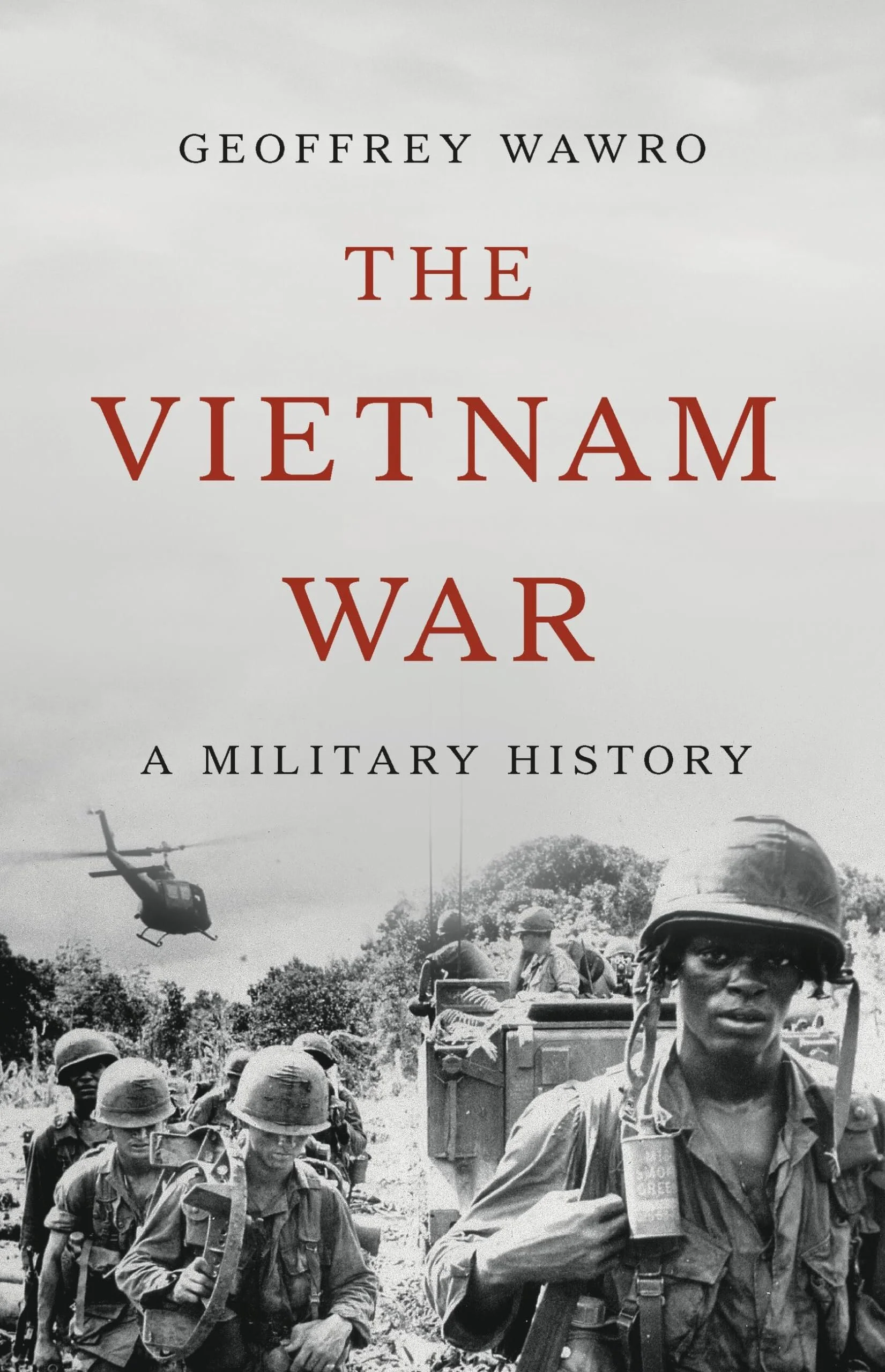
All of this Wawro captures very well in his sweeping historical account. He does not mince words or qualify America’s engagement, showing clearly how obvious it was that the war was doomed, and chronicling the bull-headed choices that drove it forward anyway. It is, as described, a military history, and so focuses largely on the flow of battles, with the social and political events described more superficially. I can’t fault it for this—it says “a military history” right in the title—but I think the battles themselves are the least interesting part of the war, since they were so similarly futile, and apart from Tet did little to change the face of the war writ large.