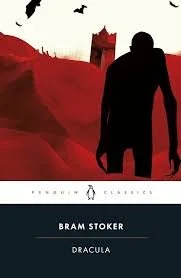
I last read Dracula in university. I remembered liking it, and wanted to pick up an example of an epistolary novel for something I’m working on, so it seemed a good time to revisit it.
Recounting the story seems redundant, if not outright insulting. It’s Dracula. I doubt there’s a person alive who doesn’t at least know the basics. However, for those who never encountered the book, they might be surprised at how little the titular vampire actually appears in the story. They certainly talk a lot about him, but apart from the early pages chronicling Johnathan Harker’s journey to the Count’s Transylvanian castle, his actual appearance is relegated to a view ominous glimpses and a line or two.
This is largely due to the novel’s conceit as a compilation of letters and diary entries. Dracula is not among the correspondents, so the perspective instead revolves around Harker, his fiancé and later wife Mina, and Dr. Seward, as they first come to terms with the supernatural threat facing them, and then seek to stamp it out.
The writing is, to be honest, not incredible. Allowances must be made for its era, but even taking this into account, there is a lot of effusive praising of masculine virtue and pronouncements of undying fealty that get a little tiresome. The dialogue likewise has its awkward moments, namely Stoker’s excessive fondness for eye dialect, which is especially jarring given that we are supposed to be reading accounts from the narrators. Why they would bother extensively quoting some bumpkin by painstakingly capturing their pronunciation is a question left unanswered.
As a novel, Dracula hasn’t aged terribly well. But in its villain, he drew from a tapestry of eastern European folklore to create a complex and sinister creature that has not merely become a pop culture icon, but fundamentally defined the vampire for all future horror fiction in the same way Tolkien defined the elf for fantasy. Even books like Twilight that deliberately undercut the usual trappings of the vampire are still, in their rebellious way, working from Stoker’s template. Few authors will ever make so deep an impact.