• The Fever Cabinet
  • Whitetooth Falls
    • Yellow Locust
    • Iron Circle
  • Other Work
  • About the Author
  • Justin Reads
  • Contact
Menu

Justin Joschko

Street Address
City, State, Zip
Phone Number
Author of Yellow Locust

Your Custom Text Here

Justin Joschko

  • The Fever Cabinet
  • Whitetooth Falls
  • Yellow Locust Series
    • Yellow Locust
    • Iron Circle
  • Other Work
  • About the Author
  • Justin Reads
  • Contact

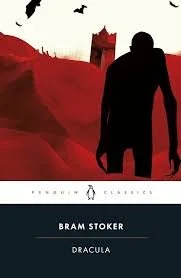
Dracula - Bram Stoker

January 14, 2026 Justin Joschko

I last read Dracula in university. I remembered liking it, and wanted to pick up an example of an epistolary novel for something I’m working on, so it seemed a good time to revisit it.

Recounting the story seems redundant, if not outright insulting. It’s Dracula. I doubt there’s a person alive who doesn’t at least know the basics. However, for those who never encountered the book, they might be surprised at how little the titular vampire actually appears in the story. They certainly talk a lot about him, but apart from the early pages chronicling Johnathan Harker’s journey to the Count’s Transylvanian castle, his actual appearance is relegated to a view ominous glimpses and a line or two.

This is largely due to the novel’s conceit as a compilation of letters and diary entries. Dracula is not among the correspondents, so the perspective instead revolves around Harker, his fiancé and later wife Mina, and Dr. Seward, as they first come to terms with the supernatural threat facing them, and then seek to stamp it out.

The writing is, to be honest, not incredible. Allowances must be made for its era, but even taking this into account, there is a lot of effusive praising of masculine virtue and pronouncements of undying fealty that get a little tiresome. The dialogue likewise has its awkward moments, namely Stoker’s excessive fondness for eye dialect, which is especially jarring given that we are supposed to be reading accounts from the narrators. Why they would bother extensively quoting some bumpkin by painstakingly capturing their pronunciation is a question left unanswered.

As a novel, Dracula hasn’t aged terribly well. But in its villain, he drew from a tapestry of eastern European folklore to create a complex and sinister creature that has not merely become a pop culture icon, but fundamentally defined the vampire for all future horror fiction in the same way Tolkien defined the elf for fantasy. Even books like Twilight that deliberately undercut the usual trappings of the vampire are still, in their rebellious way, working from Stoker’s template. Few authors will ever make so deep an impact.

Tags Dracula, Bram Stoker, Fiction, Horror, Gothic, Vampire, 1897

Let the Right One In - John Ajvide Lindqvist

January 12, 2019 Justin Joschko
Let the Right One In.jpg

I’m hesitant about vampires.

I wouldn’t go so far as to say I’m anti-vampire—an increasingly common stance in the post-Twilight world—but I do approach books about them with some degree of skepticism. They are, as a trope, a bit shopworn, and the sheer volume of stories about them have worn several crisscrossing ruts in the narrative earth. A careless write can all-too-easily slip into one, and find themselves unable to extract their story from its cliched depths.

As such, I read the first pages of John Ajvide Lindqvist’s book uncertain as to whether I’d bother finishing it. Part of this reluctance came from the fact that I couldn’t quite remember why it was I’d requested it in the first place—due to a processing error at my local library, I received my copy about 18 months after I’d put a hold on it. What passing whimsy first sparked my interest I’ve no idea.

In any case, I read the first chapter reluctantly, but after fifty pages or so my reluctance vanished. While it opens with a fairly common scene (shy protagonist, unpopular, beset by bullies), the story grows by maintaining the courage of its convictions. It treats vampirism not as an adolescent power fantasy, but as a terrible disease, which is how some of the earliest writers in the genre envisioned it.

Another strength is that it delves into the psychology of one of the more peculiar roles in the vampire mythos: the familiar. For those less familiar (no pun intended; seriously, I only noticed this while proofreading) with vampire fiction, a familiar is a vampire’s human servant and protector, performing the tasks that the vampire, exiled from daylight, cannot. Usually, the familiar serves the vampire with the hopes of one day joining his ranks. In Let the Right One In, his motives are different. The familiar, a middle-aged man named Håkan, has no interest in becoming a vampire himself. Instead, he goes about his grisly duties in order to feed his own particular hunger, one that is, in its way, just as sinister as the vampire’s.

I hesitate to comment on the prose, as the book is in translation from the Swedish, but he version I read was well-written, lyrical without being too flowery, though the occasional over-reliance on sentence fragments stuck out.

All in all, I’d recommend Let the Right One In for readers seeking a thoughtful, modern take on a classic trope, and those who can handle taboo subjects and a bit of gore.

Tags John Ajvide Lindqvist, Let the Right One In, Young Adult, Horror, Fiction, Vampire
Comment

POWERED BY SQUARESPACE.