• The Fever Cabinet
  • Whitetooth Falls
    • Yellow Locust
    • Iron Circle
  • Other Work
  • About the Author
  • Justin Reads
  • Contact
Menu

Justin Joschko

Street Address
City, State, Zip
Phone Number
Author of Yellow Locust

Your Custom Text Here

Justin Joschko

  • The Fever Cabinet
  • Whitetooth Falls
  • Yellow Locust Series
    • Yellow Locust
    • Iron Circle
  • Other Work
  • About the Author
  • Justin Reads
  • Contact

Madame Bovary - Gustave Flaubert

February 26, 2020 Justin Joschko
Madame Bovary.jpg

There are, in fact, three Madame Bovarys in Madame Bovary, all of whom bear some relation to Charles Bovary, the character who begins the novel as its protagonist and whose life is, in large part, defined and dictated by the three women who share the eponymous moniker. The first two are his mother and first wife, who oversee his transition from shy country boy to competent if not brilliant country doctor. After his first wife’s death, Charles remarries a young woman named Emma, the daughter of a patient, with whom he has grown smitten.

It is this Madame Bovary who becomes the focus of the novel, usurping it from her well-meaning but bumbling husband, for whom she feels more pity than love—that is, until the former emotion sours into contempt. Educated in a convent and devoted to stories of high romance, Emma chafed against the banality of life as a country doctor’s wif,e taking solace in affairs and exuberant spending, which together prove her ruin and that of her husband.

Though very much Emma’s story, the novel is populated with other memorable characters who, though not broad enough to be caricatures, are penned with enough acid to satirize provincial life. There’s Homais, the conceited pharmacist, who speaks in soliloquies and fancies himself an expert in everything; Lheureux, the scheming merchant, who gouges everyone in town and finds a pair of ideal marks in Charles and Emma; Rodolphe Boulange, the wealthy Don Juan who seduces Emma as easily as he eventually discards her.

The writing is elegant and teeming with detail. While I lack a refined ear for style in French, I know enough to appreciate the fluidity of Flaubert’s prose, and though his vocabularity strained the limits of my knowledge, his writing was clear enough to comprehend with only accasion dips into the dictionary. It took me a while to finish, but it was never less than enjoyable to read.

Tags Madame Bovary, Gustave Flaubert, literary fiction, Francais, French Literature, 1856
Comment

The Great God Pan - Aurthur Machen

February 19, 2020 Justin Joschko
The Great God Pan.jpg

This is a strange one, the result of a Wikipedia trawl some time ago. Machen, though all but forgotten now, is in many ways the forefather of 20th century horror in the same way Horace Walpole was for the 19th, and The Great God Pan is his Castle of Otranto. It served as direct inspiration for Bram Stoker's novel Dracula, and its preoccupation with strange gods, occult practices, and the corrosive effects of dark knowledge on the human psyche all presage HP Lovecraft.

The story opens with a man named Clarke, who witnesses an operation by Dr Raymknd on a young woman named Mary. The purpose of the procedure is to allow her a glimpse at another world populated by gods. The surgery is apparently successful, for the subject is promptly stru k by overwhelming terror and dissolves into idiocy. From there, the novel bounces between characters and locations, telling a fragmented story of another young woman named Helen, whose otherworldly beauty is ruinous to those around her, and speaks of dark forces.

The plot of the novel is a bit disjointed, and the multicameral nature of its telling makes it difficult to piece the different events together. But I can't deny its influence, and I can only imagine its novelty when it was published back in 1890. The prose is propulsive--slightly purple at times, but I have a weakness for that kind of writing, particularly in that genre and from that era. All in all a good find. I'll be sure to read more from him in the future.

Tags The Great God Pan, Arthur Machen, Horror, 1890
Comment

Great Expectations - Charles Dickens

February 17, 2020 Justin Joschko
Great Expectations.jpg

Dickens has long been one of the more embarrassing gaps in my literary knowledge. Prior to picking up Great Expectations, the only book of his I’d read was A Tale of Two Cities—a good book, but one not very representative of his typical themes. With its orphaned protagonist, family intrigue, and dissection of the English class system, Great Expectations is much more the quintessential Dickens novel—exactly the sort of story one thinks of as “DIckensian.”

The story is narrated by the aforementioned orphen, a boy named Pip, who begins the novel in the care of his overbearing and resentful sister and her kindhearted but simple husband Joe. A chance encounter with an escaped convict echoes through his life in unexpected ways, though at the titme it seems only to cause him a few days of fear and discomfort. As he grows older, Pip makes the acquaintance of an eccentric shut-in named Miss Havisham, who wears a wedding dress in lamentation of her betrayal by a jilting lover, and her beautiful but cold adopted daughter Estella, whom Pip falls in love with. The story teaks an unexpected turn when Pip learns that a mysterious benefactor has provided him with the financial means necessary to become a gentleman, and he departs for London under the guardianship of the lawyer Jaggers.

The story is full of melodrama and the characters are drawn broadly, demonstrating the heights of either vice or virtue, but both of these characteristics are so dinstinctly ties to Dickens that it would be naive not to expect them. They are simply part of his style, and the richness of his prose and the power of his stories makes them work.

One aspect of the story that surprised me was its humour. It’s been a while, but I don’t recall A Tale of Two Cities as being particularly funny, so some of the great turns of phrase in this book struck me off guard. Dickens wields an erudite wit, dealing slashes of irony so sharp and fine their presence isn’t felt until a couple of sentences later. His writing is rewarding for this, along with its imagery, but it can be dense at times to a modern reader, so my pace was a bit slower than it would be typically be. The book definitely whetted my appetit for more Dickens, though I’ll likely take a break with lighter fare in the meantime.

Tags Great Expectations, Charles Dickens, literary fiction, England, English Literature, 1861
Comment

Death's End - Liu Cixin

February 4, 2020 Justin Joschko
Deaths End.jpg

Liu Cixin's Three Body Problem Trilogy reminds me of the Foundation series by Isaac Asimov. Both tell stories massive in scope, where the focus is less on the arc of an dividual character than that of the universe itself. Each tells a continuous story over a long span of time, with a new central character for each installment, while the characters who set the initial story in motion—Ye Wenjie in The Three Body Problem and Hari Seldon in Foundation—loom large in the mythos but are never much more than background characters.

In Death's End, the main character is Cheng Xin, a physicist from the common era who plays a critical role in the shaping of the Human-Trisolarin conflict. The story picks up after Luo Ji's discovery of Dark Forest Deterence, wherein a message identifying the location of the Trisolarin and Human solar systems is used to leverage mutually ensured destruction and stave off war. Cheng Xin is nominated Swordholder to succeed Luo Jito, meaning decision that in the event of a Trisolarin attack she will bear the ultimate decision to initiate the message and doom both worlds. The Trisolarins call her bluff, and her failure to act results in humanity's enslavement.

From there, the book takes a series of odd and fascinating turns. Rather than turning into a rebels versus empire tale of conflict, it explores a vast range of philosophical and scientific principles, carrying Cheng Xin across a sweep of time and space that dwarfs the not inconsiderable scope of the previous two books.

One of the most unusual aspects of Death's End is its tone. The other two books were contemplative in their own right, favoring reflection over action, but increasingly the story becomes in a away a meditation on it’s own smallness. I was struck by its melancholy, an emotion I don’t see reflected very often in literature. Tragedy is used a lot, but tragedy is grand and operatic. Melancholy is small and quiet and sad. In this sense, the latter half of Death’s End reminded me more than naything of Nevil Shute’s On the Beach. As in Shute’s novel, the characters in Death’s End face an apocalypse—indeed, one on a much larger scale than the one featured in On the Beach —with more resignation than anguish. There is grief, to be sure, but it’s grief of a muted, elegaic sort. It’s a bold stylistic choice to end a three-part epic, but I think it was the right one. Liu’s work has always felt like classic sci-fi, which dwelt more in the realm of ideas than characters, and the detached way in which it depict’s humanity’s end and potential new beginning seems apt.

Tags Death's End, Three-Body Problem Trilogy, Science fiction, Chinese, 2017, Translation, Liu Cixin
Comment

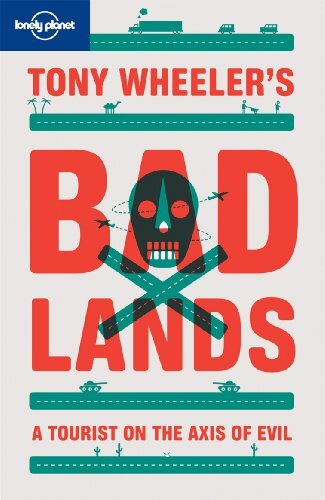
Badlands: A Tourist on the Axis of Evil - Tony Wheeler

January 23, 2020 Justin Joschko
Bad Lands.jpg

You know how sometimes you’ll be halfway through a book or movie, and some small detail will catch your eye and you’ll realize that you’ve actually seen or read it before? I had the opposite experience with Bad Lands. I received a copy for Christmas years ago, and every time I saw it on my bookshelf since, I had clear memories of reading it. I recalled enjoying it, so I picked it up not long ago, looking for something breezy and not too daunting to counterbalance the wieghty works on my reading list.

But after a couple of chapters, it became increasingly clear that I hadn’t simply forgotten large swaths of text; I’d never read the thing in the first place. By the time I’d read about Albania’s history, which included being ruled by the spectacularly named King Zog, it was clear I’d simply fabricated a memory of having read it. i would definitely remember learning about a sovereign named King Zog.

The conceit of the book is a travelogue of countries with some reputation for danger. Bush’s Axis of Evil forms a rough framework, but the book ventures beyond this skeletal structure and into such countries as Burma, Cuba, and the aformentioned Albania (a country that Wheeler admits is no longer dangerous, and that I suspect he included mostly because he found it interesting rather than hewing to the theme). The Islamic world is well represented, with Afghanistan, Iran, Iraq, Saudi Arabia, and Libya all getting a chapter.

Descriptions of historical events and politcal issues intercut with details of Tony’s travels. He concludes with a (somewhat facetious) Evil Meter, ranking the level of corruption and danger indemic to each region, and uses this as a springboard to emphasize that even countries widely see nas Good have a seamier side. The book is arranged not by geography or theme, but alphabetically, which is as good as any other way, I suppos,e but feels a bit lazy.

Wheeler’s writing is straightforward and casual, with light jabs of humor to liven up the litany of places, sites, and historical figures. He’s no prose stylist, but the tone suits the work and kept things running smoothly.

Tags Badlands: A Tourist on the Axis of Evil, Tony Wheeler, Non-fiction, Travel, Middle East
1 Comment

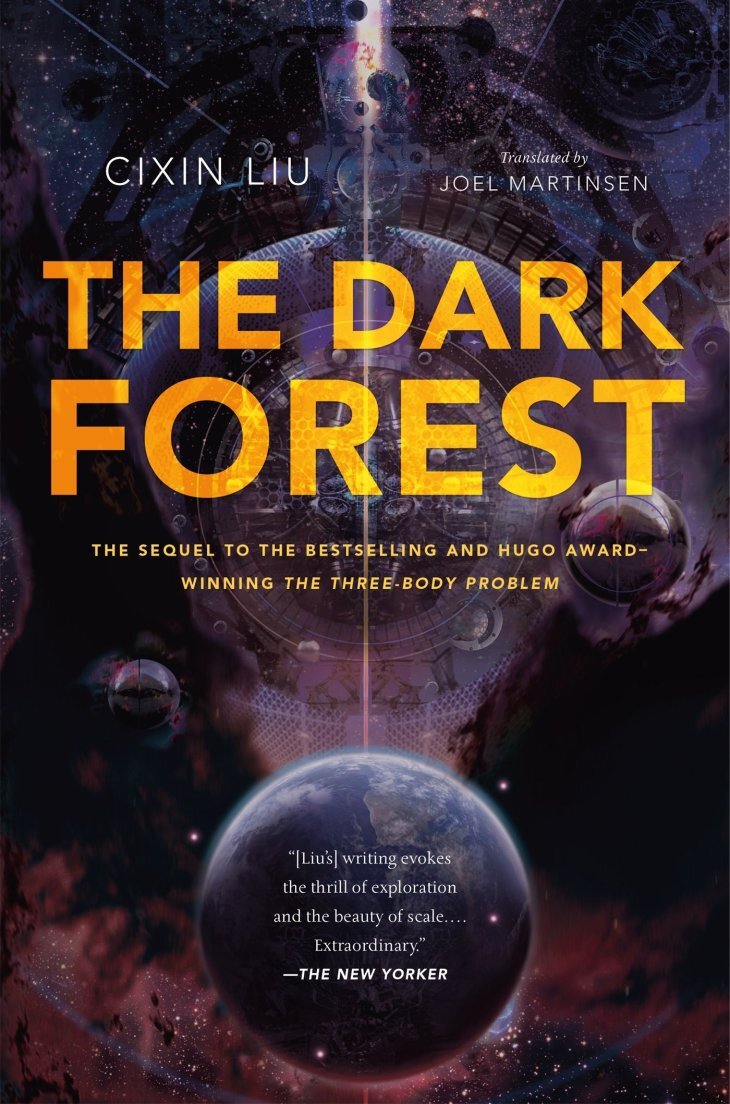
The Dark Forest - Liu Cixin

January 9, 2020 Justin Joschko
The Dark Forest.jpg

The Dark Forest picks up right where The Three Body Problem left off, with humanity’s research into cutting edge physics hamstrung by sophons, leaving Earth at the mercy of the incoming Trisolarin fleet, set to arrive in a little over 400 years time. However, in other ways the book feels like a departure from the first one, taking the story in a looser, more philosopihcal direction.

Set in various instances occurring over a 200-year period, the book leaves behind most of the characters from the first novel, focusing instead on Luo Ji, a disillusioned physicist who begins the book as a womanizing gadabout. A chance encounter with Ye Wenjie, the woman responsible for alerting Trisolaris of Earth’s location and thus setting off the invasion, leads to Luo Ji learning the fundamental axioms of Cosmis Sociology, a new field Wenjie has theorized.

Some time later, Luo Ji is named one of four Wallfacers, a UN-sanctioned program that imbues four humans with incredible latitude to conduct their own projects in secret, with the end goal of defeating Trisolaris in the upcoming Doomsday Battle. Wallfacers are instructed not to reveal their true intentions to anyone, and to even act in deliberately deceptive ways, as the sophons can read or hear any information conveyed to others through speech or writing. Luo Ji squanders his power by living a life of secluded luxury, before changes in circumstance force him to ponder an actual solution.

Luo Ji’s story is the backbone of the novel, but there are many more characters and plot threads interwoven around him. The Dar kForest is a rich, sprawling book, and while sometimes the dialogue can feel a little stilted—perhaps a result of translation from the Chinese, which I would imagine makes it very toug hto capture cadence precisely—the writing is evocative. The book poses bold ideas with confidenc,e and all of the solutions proposed feel logical and real. I can’t speak to the physics used wit hany authority, but Cixin’s reputation for researc hsuggests a solid underpinning, even in places where the technology presented ventures far beyond what is currently possible.

Tags The Dark Forest, Liu Cixin, Fiction, Science fiction, Translation, Chinese, 2015, Three-Body Problem Trilogy
1 Comment

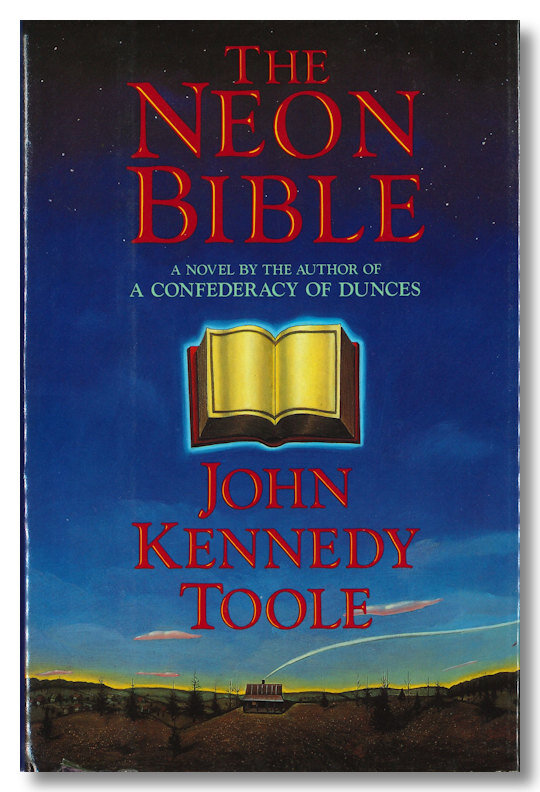
The Neon Bible - John Kennedy Toole

December 24, 2019 Justin Joschko
WRCLIT79687.jpg

I got this book at least a year ago, and I'm surprised it took me this long to get around to reading it. The Neon Bible is the story of a boy named David growing up in a tiny southern town, referred to only as the valley. It offers a series of chronilogical snapshots from his early childhood to adolescence, which function somewhere between distinct stories and a continuous narrative. The writing is spare, personal, almost childlike in its directness, a tone than feels expected in the early pages but grows increasingly jarring as the story progresses and David ages, giving an interesting effect of arrested development.

As one might expect of a book of this style, the plot is minimal. The fo us is instead on David's thoughts and the provincial, stifling atmosphere of the town and its small-minded townsfolk. The characters are well written, but hew pretty close to type, lacking the idiosyncratic detail and literary force that propelled Ignateus Reilly and Burma Jones beyond parody into twisted, glorious archetypes.

The Neon Bible is no Confederacy of Dunces, but really, how could it be? Toole wrote it at 16, and while it feels nascent, clutching too tightly to its inspirations (particularly Flannery O'Connor) to be wholly original, it nevertheless betrays an emerging talent, and at it’s best moments hints at the genius to come.

Bringing Out the Dead - Joe Connelly

December 18, 2019 Justin Joschko
Bringing Out the Dead.jpg

I came across this novel through a safari of hyperlinks through Roger Ebert’s review site. In the review of one movie (I forget which one now), the reviewer referenced a Scorsese nmovie I’d never heard of called Bringing Ou the Dead. I’m hardly a Scorsese expert, but I like what I’ve seen of his, so I looked into it and discovered the source novel by Joe Connelly.

Bringing Out the Dead is narrated by Frank Pierce, a burned out paramedic who works the night shift in Hell’s Kitchen, where he encounters a seemingly endless parade of human misery. Drawn from Connelly’s real life experiecne as a paramedic, the novel nevertheless takes on a surreal, otherworldly quality, as the scenarios encountered seem too harsh, too bleak, to bizarre to be a straightforward image of life in that time and place (though maybe I’m just naive).

This sense of unreality is reinforced by Frank’s dry description of ghosts from cases past, some who haunt him mutely from the edges of perception, others who insert themselves into his reality in an endless series of loops. He encounters the same girl, Rose, about a dozen times, each instance revealing a little bit more about the original Rose, a girl who he failed to save and who has thus inserted herself into his psyche, sliding in deep like a sliver of guilt.

Some of the cases seem medically impossible, such as the corrupt garbage kingpin who (briefly) survives having his head crushed by onbe of his garbage trucks, and the cases form the dispatcher grow increasingly strange, dissolve into litanies of suicides and informed by details a 911 dispatcher couldn’t possibly know. There are moments of shocking violence described without hyperbole or ramification. At one point one of Frank’s partners runs over an injured person. Was it a ghost? A hallucination? Did the guy know what he’d done? Did he care? Frank doesn’t say.

The novel seems less interested in reporting the veracity of events than in capturing a mood. Five years as a paramedic in a poor neighbourhood is no doubt a tough gig, and the story does a good job of illustrating what burnout probably feels like. Frank’s nights as a medic seem less like an occupation than a curse, a sisyphean ordeal foisted on him from some past misdeed.

The prose is hallucigenic but believable, a tough combination in first person, where overwriting can easily become apparent. A good book overall.

Tags Bringing Out the Dead, Joe Connelly, literary fiction, New York, 1998
Comment

The Ghost Road - Pat Barker

December 10, 2019 Justin Joschko
The Ghost Road.jpg

I approached The Ghost Road assuming it was a novel about the First World War, and indeed it is commonly billed that way, but I can’t help but feel that the descriptor is inapt, or at least incomplete. Certainly the Great War features prominently, both in the action presented and in the minds of the novel’s two protagonists, who see the conflagration through very different lenses. But at its heart, The Ghost Road feels more like a book about an era than an event, a sensation reinforced by the book’s regular jaunts outside of war-torn France and Belgium to other locales entirely.

The story’s two protagonists are Billy Prior, a working-class officer who feels driven to return to the field of battle despite mutiple medical deferrals, and William Rivers, a real-life psychoanalyst and ethnographer. Barker peppers her novel with a mixture of fictional and real characters, a method of verisimilitude evidently carried over from the earlier books in the series (The Ghost Road is the final book of a trilogy, the first two of whcih I have not read). Approaching the book without any real foreknowledge, I didn’t realize this fact right away, and was suprised in retrospect that some of the characters she’d mentioend were real people (it didn’t dawn on me until the afterword that Prior’s comrade Owen was actually the poet WIlfred Owen, though in my defence I don’t think she ever calls him by his full name).

The book’s prose is elegant and ornate, with plenty of strong images. It was also surprising in its sexual frankness, which again I’m sure would have been less unexpected if I’d read the first two books, or known more of Pat Barker’s book. Barker’s depiction of a bisexual man in that time and place was interesting, though the lewdness seemed layered on a bit thick at times. However, many war novels underplay the average soldier’s preoccupation with sex, so in a sense Barker’s frankness wa refreshing.

Though Prior’s trajectory brings him to Franc,e a good chunk of his narrative oocurs while back in England, giving a glimpse of World War 1 in a place where the fighting was not actively ranging, but the violence instead filtered in through bittersweet homecomings of crippled boys or letters with black bordered envelopes. We also venture further afield during Rivers’ regular recollections of his time in the Solomon Islands. The experience of the isalanders under British hegemony, and their relatioship with death. provides interesting counterpoint to the events of the war.

All told, I enjoyed the book, and will likely go back and read the earlier installments in the trilogy. Really, I probably hsould have done this first, but the Ghost ROad was the only one I had in my collection. Oh well.

Tags The Ghost Road, Pat Barker, Edwardian Era, World War I, 1995
1 Comment

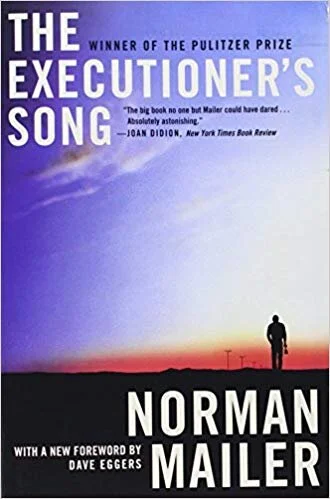
The Executioner's Song - Norman Mailer

November 29, 2019 Justin Joschko
The Executioners Song.jpg

Gary Gilmore had spent over half of his life in prison when, only several months after getting parole, he killed two men in two separate, cold-blooded, and entirely pointless acts of violence. Both crimes were ostensibly committed during robberies, but Gary didn’t seem that interested in the money and made calculated and deliberate decisions to kill. No one exactly knows why, least fo all Gary.

These events form the fulcrum on which the vast, sprawling narrative of the Executioner’s Song pivots, with the lead-up of Gary’s troubled life pulling down on one end against the counterweight of justice on the other. The result is a powerful, if at times exhausting, work of new journalism, similar in structure to a novel but distinct enough that the subtitle “A True Life Novel” feels more like a bit of marketing than an accurate summary. Mailer uses some of the tools common to novelists—shifting his prose to reflect the points of view of various characters, for instance—but the dry insistance on detail and use of supporting sources feels more journalistic than novelistic.

The story is immense and detailed almost to the point of pedantry, with whole chapters—arguably whole sections—devoted to such anicillary fare as the surrounding media frenzy and quest for life rights. In the book’s second half, Gary becomes almost hollowed out as a figure, the story less about him than about the interests orbiting around him. Still, Gary Gilmore emerges as a complex figure, and Mailer manages to imbue him with a level of humanity that is almost uncomfortabl,e given the atrocity of his crimes.

Mailer’s prose is solid, evocative without hyperbole, shifting sleekly between the florid images of literary fiction and the homespun cadence spoken by the characters who populate the story. I’ve read a couple of his books in the past, but it has been some time and the Executioner’s Song reminded me how much I like his writing.

Tags The Executioner's Song, Norman Mailer, American Literature, Non-fiction, True Crime, 1979
Comment

Don Quixote - Miguel de Cervantes

November 8, 2019 Justin Joschko
Don Quixote.jpg

Don Quixote is one of those books that really needs no introduction. You know what it’s about, whether you’ve read it or not: man reads too many books on chivalry, goes nuts, fancies himself a knight errant, grabs a portly squire, and engages in farcical quests around Spain. It is generally regarding as the milestone between classic and modern literature, the godfather of the novel as a literary form, the foundation on which all other novels are built.

As such, it’s perhaps not surprising that the book feels transitional, a chrysalis frozen mid-metamorphosis between the chivalric romance, with its loosely-knit cycle of quests and little interlaized drama or continuity, and the novel, with its focus on character arcs and psychology. This makes it fascinating, but also frustrating at time, as the story too often veers toward ancillary characters, who present self-contained dramas that Don Quixote witnesses but has no real bearing on. THe constant speechifying also drags a bit on modern ears, as characters often answers in paragraphs what could be said in sentences. The trait is so pervasive at times that even the other characters comment on it, chastizing one another for being long-winded.

This brings me to what was, to my eyes, the biggest surprise of the novel, which is how post-modern it feels. Metatextuality is generally associated with literature of the mid-20th century and beyond, but Cervantes got there about 350 years earlier. Moments of winking self-awareness appear in the first part, where Cervantes leverages a scene in which Don Quixote’s books are destroyed to plug his own work and comment on those of his fellow authors.

But the meta quotient really kicks in in part 2 (written ten years after part one but now widely considered a part of the original novel rather than a sequel). In this section, the original book has been written and exists in the universe of the sequel, where many of the characters Don Quixote encounters have read it. Part 2 also mentions a phony sequel, which was actually written (and served as a catalyst for Cervantes to write his own sequel). Cervantes takes multiple shots at it. having Don Quixote and Sancho Panza lambast it for its innaccuracies. A character form the phony sequel even appears in Part 2, where he admits that the supposed Don Quixote he encountered must be fake, and signs a sort of affadavit to that effect.

These exchanges provide a lot of the book’s humor, and it is a very funny book—surprisingly so, given how humor can sometimes fare poorly over time. I’ve never laughed at a joke in a Shakespeare play, but a laughed a number of times here (though often this was at stuff like Don Quixote and Sancho Panza puking in each other’s faces, or Sancho taking a sneaky dump off the side of his mule while Don Quixote drones on about chivalry, so maybe that says more about me than Shakespeare).

All told, I think calling it the bets novel of all time is over-selling it (certainly that would mean the genre peaked early), but it deserves its place in the canon and is worth reading.

Tags Don Quixote, Miguel de Cervantes, Spanish literature, Translation, 1615
Comment

Nuking the Moon - Vince Houghton

October 19, 2019 Justin Joschko
Nuking the Moon.jpg

Nuking the Moon was another book I stumbled across thanks to my wife, who checked it out from the library and foolishly left it where I could see it. The title, naturally, grabbed my attention, and I welcomed a more lighthearted distraction from the heavier fare I'm currently working my way through, of which more later.

Written by an intelligence e pert and curator of the International Spy Museum, Nuking the Moon takes the interesting approach of documenting the most ambitious and unbelievable exploits that didn't actually happen. That's not to say their fictional, but merely plans that never made it past the drawing board stage, or at least never saw fruition.

Houghton knows his stuff, and the stories are told with rich detail and obvious enthusiasm. His humor can feel a little forced at times, but the “dad joke" aesthetic seems deliberate, and was ultimately a better choice, given the material, than trying to document such exploits as warming a nuclear mine with live chickens using dry academic prose.

Tags Nuking the Moon, Vincent Houghton, Non-fiction, Cold war, 2019
1 Comment

The Caine Mutiny - Herman Wouk

October 1, 2019 Justin Joschko
The Caine Mutiny.jpg

The Caine Mutiny is one of those books that has simply been in the ether lately. I saw it mentioned in several different places over a one week period (technically it was the movie being referenced, but close enough), and eventually my interest was sufficiently piqued to check it out. The story follows a young man named Willie Keith from his beginnings as a rich layabout slumming as a nightclub pianist, through midshipman school to life aboard a minesweeper called the Caine. It is here Willie meets Captain Queeg, an outsized character whose megalomania, cowardice, and paranoid persecution complex have drawn apt political comparisons of late.

Willie is not actually the pivotal character in the eponymous mutiny, but rather something between an active participant and an observer. Yet it is his perspective that provides the lynchpin for the story, despite its willingness to venture off into different perspectives where necessary. Wouk rounds out the story with a rich cast of supporting characters, including Maryk, a dutiful lieutenant and former fisherman who becomes a reluctant mutineer; Keefer, an erudite writer who resents Queeg but lacks the courage to oust him; and May Wynn, a nightclub singer and daughter of a lower class fruit vendor, who plays the role of star-crossed lover for Willie.

In a foreword provided by my edition of the novel, Wouk notes that the book initially received a lukewarm reception, and that its success coincided with that of another book about the Pacific theater in World War II: From Here to Eternity by James Jones. The superficial comparisons are obvious, but the books actually offer a significant contrast to one another. Jones’ prose is more lyrical, his tone darker and more fatalistic. Wouk injects a fair bit of comedy into his novel, and while it falls short of satire, there is a broadness to some of the characters that reminded me, in their most extreme moments, of Evelyn Waugh’s Men at Arms (though never reaching the zany intensity of Catch-22)

Robert E Lee Prewitt is also a much different protagonist than Willie Keith, with the former being a hard-bitten ex-boxer from a poor southern family, and the latter a rich northern Princeton grad whose status consciousness causes him much inner turmoil. Prewitt is a man aged beyond his years, Willie a boy in a man’s body who goes to sea to grow up. The ultimate fates of the two characters is about what you’d expect.

The book was gripping in its rich use of detail, first of life at sea, and later of the legalities of the court martial process. Wouk clearly knows his stuff, and presents it in a way that feels natural. I look forward to reading his other war novels.

Tags The Caine Mutiny, Herman Wouk, World War II, 1951
1 Comment

I Never Promised You a Rose Garden - Hannah Green

September 13, 2019 Justin Joschko
I Never Promised You a Rose Garden.jpg

I Never Promised You a Rose Garden is a good example aof a novel that suffers from poor synopses. It is generally billed as the story of Degborah Blau, a young woman whose life is divided between the relaity of a mental institution and the fantasy realm of Yr.

Superficially, this is accurate, but it strongly implies that Yr is a Narniaesque place of adventure and magic, where Deborah goes to fulfill the destiny denied her in the real world. Whereas the Yr reflected in the book is far less tangible. Its few physical features are scarecly mentioned at all, and generally only in recolleciton between Deborah and her psychiatrist, Dr. Fried. We the reader spend basically no time in Yr at all. Instead, we see it through her discussions with Dr. Fried and her own internal struggle. Yr is less a place than a pantheon of Gods that has grown increasingly oppressive, and a language in which Deborah’s scrambled thoughts can be more clearly articulated.

The split in the novel is thus not really reality versus fantasy, but internal versus external, as Deborah struggles to permeate the barrier without destroying herself in the process. We also spend more time with her family than I’d expected, who are portraying wit ha refreshing level of nuance. Her mother and father are flawed people, and subject to a less than perfect family dynamic marred by the outsized personality of her grandfather, but they all care about her deeply, and the root cause her illness is not foisted upon them. There’s no single breakthrough that brings Deborah back to the real world—another common cliche in books about mental illness—but a gradual paring back of thought and memory. All told, it paints a nuanced and accurate portrayal of therapy, which is perhaps not surprising, given the the novel is semi-autobiographical and concern’s the author’s actual experiences.

The book was perhaps not what I expected to be, but is ultimately stronger for defying those expectations. The writing is rich and eloquent, with evokative imagery that never feels stilted or excessive. Deborah’s whiz kid dialogue, clotted with witticisims, seemed a bit much, but this receded over the course of the book, and was likely meant to show her defense mechanisms. I found it jarred wit hthe otherwise naturalistic dialogue, but it wasn’t a fatal flaw.

Tags I Never Promised You a Rose Garden, Hannah Green, Mental Illness, 1964
Comment

The Shame of the States - Albert Deutsch

September 4, 2019 Justin Joschko
The Shame of the States.jpg

The Shame of the States is not the book I’d pictured it to be. Having come across a reference to it in Edward Shorter’s A History of Psychiaty, I’d imagined it as a kind of proto-gonzo journalism in the vein of Black Like Me, where Deutsch would masquerade as someone with mental health issues in order to expose the deplorable conditions of insane asylums. To be sure, there is an exposé element to The Shame of the States, but it is not one reach through duplicity. Deutsch announced his intentions to every one of the asylums he visits, and stresses that in the majority of cases he was welcomed with open arms.

That is not to say that the conditions he saw were favorable, or that he pulled any punches in his reporting. Rather, it speaks to the desperation in which asylum administrators found themselves—hopelessly underfunded and overworked, with barely trained staff and annual turnover rates approaching 100%—that they willingly exposed the foetid underbellies of their institutions in the hopes that learning of their appalling conditions would shock the public out of complacency, and that their outrage would trickle down to the politicians holding the purse strings.

I can’t say whether Deutsch’s book was successful in that regard, though I can say the picture he paints is vivid and heartbreaking, full of people in restraints or slumped in chairs, of beds filling a room so completely there is no space left to walk around them, of crumbling walls and ceiling bubbling with rot. Deutsch brought a photographer with him to every asylum he visited, and the photos he captured further underscore the squalid conditions of most of these institutions.

Though writing with the restrained, clinical prose of a seasoned journalist for most of his observations, Deutsch cannot restrain his seething anger at the state of affairs he witnesses, and the book contains a number of passages in which he allows himself the freedom to editorialize. The case studies make up the bulk of the text, but the book has other facets as well, making it part history, part journalism, part treatise.

Deutsch’s compassion for his subjects cannot be denied, though the age of the book means that some of the language he uses can be jarring to a modern reader. He refers to people with mental disabilities as “mentally defective” and “feeble-minded,” and regularly throws about the term idiot as a descriptor. People with Down Syndrome are referred to as “Mongolian Idiots.” I admit I cringed a bit at some of these passages, though it’s worth reiterating that Deutsch employs these terms without malice, and that the phrases he uses were at the time blandly clinical. He even makes a point of distinguishing between morons, imbeciles, and idiots, terms that signified increasingly severe levels of cognitive delay. “Idiot” and “moron” have been so thoroughly expunged of their clinical roots, that it is almost impossible to hear them as anything other than insults. Seeing them presented this way is an interesting reminder of how language changes over time.

Tags The Shame of the States, Albert Deutsch, Non-fiction, Medicine, Mental Illness, 1948
Comment

Vingt mille lieues sous la mer (Twenty Thousand Leagues Under the Sea) - Jules Verne

August 31, 2019 Justin Joschko
Vingt mille lieues sous la mer.jpg

Vingt mille lieues sous la mer is the fourth Jules Verne novel I’ve read (the third in the original French), and I must say, it’s been my least favorite so far. This surprised me, as the subject matter is something I’m inherently interested in, and while my readings of Verne have never strayed that far form his greatest hits, Vingt mille lieues is arguably the greatest hit of them all (I’d argue Voyage au centre de la terre is second, and Le tour du monde en quatre-vingt jours third, though I admit I’m basing this on my own perception and little else).

Verne could be considered the prototypical nerd, in his use of narrative to obsessively catalog scientific minutiae. Whatever the story, you can bet that at some point, Verne will digress from the action at hand to write 500 breathless words about the origins of igneous rock, or the taxonomic details of coral. In some cases, this is more feature than bug—in de la Terre à la Lune, for instance, when his recurring treatise on ballistics lends credence and weight to what would otherwise be a spare narrative.

The key difference, I think, is that in Lune and Voyage au Centre de la Terre, there is an underlying urgency to the story that keeps Verne’s digressions in check. The cannon needs to launch at the precise date and time in order to hit the moon, and Axel can only spend so much time poring over subterranean fungi before Professor Lidenbrock drags him on to their ultimate destination. In 20,000 lieues, however, the story is essentially a chronicle of Professor Arronax’s time on the Nautilus, which Captain Nemo cruises about the oceans on a whim. Without that forward drive, Verne has no incentive to rush to any one conclusion, and as a result, the detours become the trip. Much of what happens feels like it is of no real consequence, and most events seem primarily positioned to allow Verne the opportunity to spout scientific facts and theories, some of more merit than others (Atlantis makes an appearance). In other Verne works, the opportunity to wax scientific is only part of the reason for events—there’s generally some forward plot momentum going on too.

And the descriptions of fish, my god, the descriptions of fish. There must be close to a dozen passages that are little more than taxonomic litanies of every bit of flora and fauna in a given sea. This is particularly frustrating for a non-native reader, as the names of many creatures he describes fall outside the scope of my e-reader’s built in dictionary, and by the third or fourth fish, I’m just too tired to bother looking them all up on my phone. As such, I’m stuck deducing what he means from the description of each animal. It doesn’t help that he tends to use less common names for some animals (though perhaps this is an issue of age more than erudition). Notably, he uses the word squale for shark in most cases, when a modern French speaker would opt for requin.

This all sounds a bit nit-picky, and maybe it is. Despite the book’s faults, there were still moments I truly enjoyed ,and Verne retains his capacity to make his own wonder at the world infectious. And Captain Nemo is a good character, intriguing in his sombre nobility. He is an honorable man who does dishonorable things, which is about as much nuance as you’re likely to get in a Jules Verne character (like Lovecraft, Verne is the kind of genre fiction writer who eschews character development almost entirely in favor of raw story, and whose vision is so honed and rich that he gets away with it).

Tags Vingt mille lieues sous la mer, Twenty Thousand Leagues Under the Sea, Jules Verne, Science fiction, Oceans, Francais, 1870
Comment

Spartacus - Howard Fast

August 28, 2019 Justin Joschko
Spartacus.jpg

Sometimes, a book suprises you. I picked up Spartacus expected a straightforward telling of a fraily well-known story: a slave rises up against his masters, raises an army, and fights against the tyrannical forces of Rome until cut down in a blaze of glory. What I did not expect was a strange, cubist masterpiece that resonates across time and place, to make a profound statement on what society is and what it costs us.

The novel begins in the months after the Roman general Crassus has defeated Spartacus and put down his rebel army, and returns to the life of the eponymous character only in flashback. His story emerges through the recollections of various characters who either knew him or knew his reputation: Crassus, the above-mentioned general, who did not meet Spartacus on the field of battle but came to admire his tactics even as he abhorred his insurrection; Batiatus, the owner of a gladiator school whose scouts rescued Spartacus from a Nubian mine; Gracchus, a corpulent Roman senator, whose dealings with Spartacus, however indirect, spurred an existential crisis; David, a Jewish gladiator who fought beside and idolized Spartacus.

The narrative shifts fluidly between these characters, and is not bound by the limits of their own knowledge. We gain direct access to Spartacus’ thoughts on some occasions, even though the ostensible teller of the story whould have no knowledge of them. The result is a panoramic tale that is less about historicla accuracy—much of the occurences Fast recounts are completely lost to history, and he plays fast and loose with details even in situations where they are known—than about the creation of myth, and the way such myths can ripple through time.

Fast’s prose is sumptuous, grandiloquent, unafraid of lofty pronouncements and detours into philosohpical speculation. He manages this without growing tedious or unduly absorbed in his own musings. Rather, it captures the broader tone of the book, pulling out the few threads of fact (or assumed fact) that remain of Spartacus’ legacy, and weaving them into something wondrous and whole.

Rarely has a book so exceeded my expectation. And what makes its triumph as a work of art all the sweeter is this: Fast was forced to self-publish the book after blacklisting censors bullied every publisher in America into rejecting it. It ended up becoming a runaway best-selle,r and inspired the movie that arguably delt the deathblow to the blacklist itself. All this from a book about rebelling against impossible odds.

If that isn’t justice, I don’t know what is.

Tags Spartacus, Howard Fast, literary fiction, Historical fiction, Ancient Rome, 1951
Comment

Winter's Bone - Daniel Woodrell

August 21, 2019 Justin Joschko
Winter's Bone.jpg

The strength of Winter’s Bone lies in its simplicity. Ree Dolly is a girl from a community deep in the Ozarks where blood ties mean everything—or are supposed to—and the law isn’t trusted. She’s a mother to her two younger brothers, and to her own mother, who tumbled into madness some years before. Her father has vanished while out on bail, and the sheriff tells her that her house was posted as bond. If he doesn’t turn up, dead or alive, it goes to the county, and Ree and her family will be left homeless.

So begins an odyssey through the backwoods of Missouri, as Ree travels from house to house and town to town in search of answers. The Dolly bloodline flows into every corner of her world, but there are places where it runs too thin to protect her. The plot is spare, exposition flensed clean, resulting in an immediacy that further bolsters the comparisons with Cormac McCarthy, which were already inevitable from the subject matter and the writing style.

Woodrell’s prose is swift and lyrical, full of rich imagery that rises naturally from the words, rather than artful constructions of metaphor. At its best, it’s hallucinatory. though there were the odd passages that felt a bit overdone for me. One example: “a picnic of words fell from Gail’s mouth to be gathered around and savored slowly.” Such moments feel a bit self-consciously literary, but I’ll freely admit that my own writing could draw similar criticism, and probably does. Style is a matter of taste, and on the whole, Woodrell’s style is deft enough to earn its flourishes. It is not quite as transcendent as McCarthy’s but that’s a high bar to reach.

Tags Winter's Bone, Daniel Woodrell, Southern Gothic, Noir, Crime, 2006
Comment

The Red Badge of Courage - Stephen Crane

August 14, 2019 Justin Joschko
The Red Badge of Courage.jpg

I’m several episodes into Ken Burns’ documentary on the American Civil War, and it inspired me to revisit The Red Badge of Courage, a book I hadn’t read in decades and barely remembered. It tells the story of Henry Fleming, a young man who leaves his small town to become a soldier in the Union army.

Though it depicts several battles in great detail, much of the book’s action is internal, as Henry struggles with his competing fears of death and cowardice. He spends much of the book’s first section obsessing over how he will fare in battle, by turns certain he will display valor and terrified that he will crumble under the pressure. Rattled by a Confederate charge, he flees, and the middle section finds him fighting on two fronts: a practical one, as he decides whether to desert entirely or slink back to his regiment, and a personal one, as he wallows in self-disgust at his cowardice and jealousy of the wounds of his comrades, which he sees as signs of bravery—or red badges of courage, as the title has it.

The prose is lyrical but dens,e filled with rich detail that can illuminate moments while leaving the broader action somewhat obscured. There is an opacity to the text that may be deliberate, a little like WIlliam Faulkner’s tendency to sidestep key moments and view them only on the periphery. This sensation is further enforced by Crane’s insistent use of descriptions rather than names to identify characters. Henry is referred to almost exclusively as “the youth” by the narrator, his name gleaned by the reader only through dialogue. Othe characters are referred to in the same way, so we get “the tattered soldier,” “the lieutenant,” and “the loud soldier.”

Overall, I enjoyed the book, though some of the passages feel sluggish and overburdened with description. I suspect this “slow motion” effect was deliberate, but even with a novel as short as this one, I couldn’t help but want the pace to pick up a bit at times.

Tags The Red Badge of Courage, Stephen Crane, American Literature, Warfare, Civil War, 1865
Comment

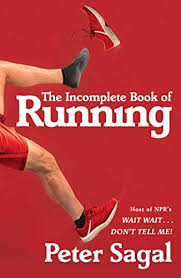
The Incomplete Book of Running - Peter Sagal

August 9, 2019 Justin Joschko
The Incomplete Book of Running.jpg

I’m a sucker for books I encounter by happenstance. In the case of the Incomplete Book of Running, my wife bought a copy for a friend, and unwisely left it on the kitchen counter where I could see it (she should know better). I have no interest in running, and I’d never heard of Peter Sagal or his game show, but the cover intrigued me and I picked it up, intending to read a few pages. A few pages became a few chapters, and I finished it in two days.

The book is a though one to categorize. Part memoir, part manifesto, it uses a loose collection of stories from Sagal’s life to reflect on what running means to him, what it’s done for him, and why it is people like to do it. Sagal eschews a linear narrative, instead bouncing around in time and space (an early reference to Billy Pilgrim sets this up nicely) while using the year of 2013 as a touchstone—a pivotal year in Sagal’s life, begun with his witnessing the horrific bombing at the Boston Marathon, and subsumed with a messy divorce that left him a bachelor in his forties. Though not shining from rough subjects, the tone is never maudlin, and Sagal demonstrates a keen wit throughout.

Jokes are hard to pull off on paper. It’s a skill distinct from stand-up comedy, and Sagal has it. Beyond being funny, the prose has a good momentum to it, lyrical without excess imagery or verbiage. It’s surprising to see an autobiography by a non-writer read so smoothly. Though it did say that he was a playwright at one point, which may explain it. In any case, it made me want to listen to his game show.

Tags The Incomplete Book of Running, Peter Sagal, Non-fiction, Autobiography, Sports
Comment
← Newer Posts Older Posts →

POWERED BY SQUARESPACE.